
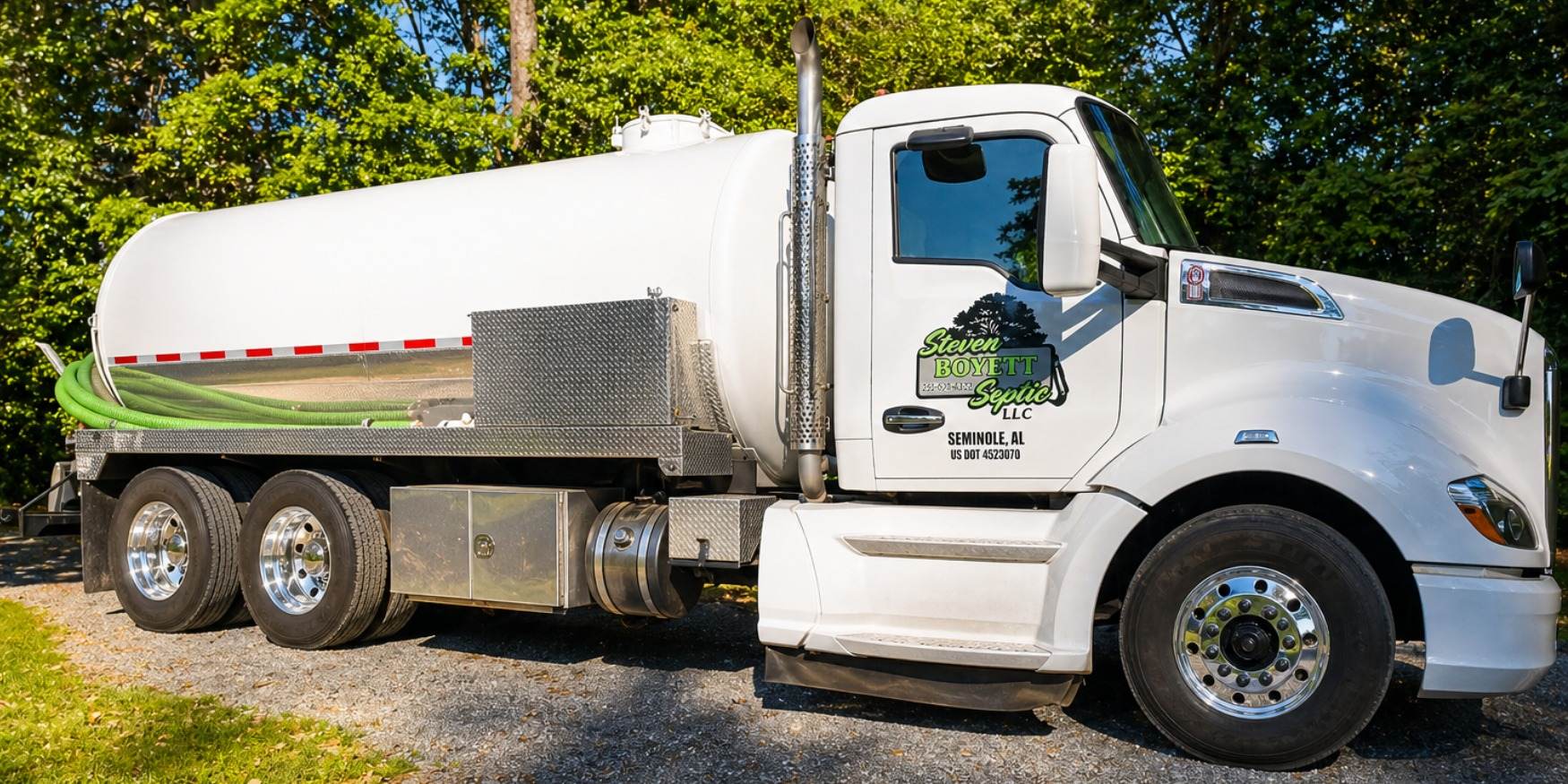
Grease Trap Pumping in Baldwin County, AL: How Often You Really Need It (And What Happens If You Skip It)
By Steven Boyett • August 6, 2026
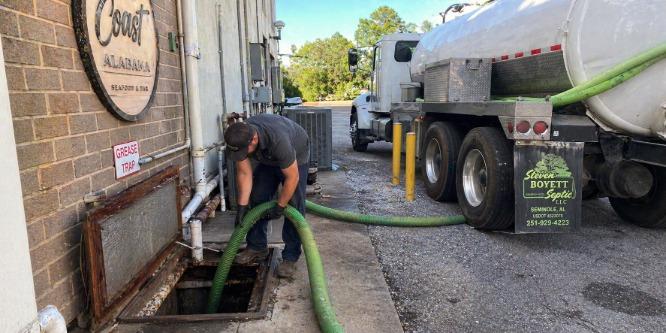
If you run a restaurant, food truck commissary, hotel kitchen, or any food service business anywhere from Fairhope to Foley to Orange Beach, your grease trap is quietly doing one of the most important jobs in your building. Ignore it too long, and it can shut your kitchen down — sometimes literally, and sometimes on a Friday night during dinner rush.
Baldwin County's restaurant scene has grown fast right alongside the county's population, and that growth puts real pressure on local sewer systems that were never designed to handle unlimited fats, oils, and grease (FOG). That's why utilities across the county — including Daphne Utilities, Riviera Utilities, and Baldwin County Sewer Service — actively manage FOG through inspection and education programs, and why regular grease trap pumping isn't really optional for most commercial kitchens here.
Here's what Baldwin County business owners should know: how often to schedule pumping, what local rules expect of you, and the warning signs that mean you can't wait for your next appointment.
Why Grease Trap Pumping Matters More Here Than You'd Think
Grease traps and interceptors work by slowing down wastewater long enough for FOG to rise and solids to settle, so only cleaner water continues on to the sewer system. That only works if the trap is emptied before it fills up. Once a trap is more full of grease and solids than it is capacity, it stops doing its job — FOG passes straight through and starts coating the inside of your pipes and the municipal sewer lines beyond your property line.
In a coastal county with a huge seasonal swing in restaurant traffic — think spring break through Labor Day along the Gulf Shores and Orange Beach corridor — grease traps that were sized and scheduled for a slower month can get overwhelmed fast during peak tourist season. A trap that only needed quarterly service in January might need monthly attention by July.
Baldwin County & Alabama Grease Trap Rules You Should Know
Requirements vary slightly by city and utility provider, but a few things are consistent across Baldwin County:
- Grease interceptors are required for food service establishments. Utilities such as Daphne Utilities require any business that prepares or serves food to install and maintain a grease interceptor to keep FOG out of the sewer collection system, and they conduct their own periodic inspections of those devices.
- Outdoor grease trap lids must be secure and load-rated. Alabama's Sadie Grace Andrews Act requires restaurants and commercial food establishments with accessible outdoor grease traps to use lids that can support traffic loads and can't be opened by children — worth checking on your next service visit if your trap sits in a parking lot or drive lane.
- FOG violations can trigger state-level consequences. Beyond your local utility, the Alabama Department of Environmental Management (ADEM) can get involved when grease-related sewer overflows happen, since those are treated as environmental compliance issues, not just a plumbing nuisance.
- Keep your service records. Federal pretreatment rules generally expect grease haulers and the businesses they serve to retain pumping manifests and disposal records for at least a few years. A reputable pumping company will hand you a manifest or receipt every visit — hang onto those in case your city or utility ever asks for proof of maintenance.
Because rules differ by municipality (Fairhope, Daphne, Spanish Fort, Foley, Gulf Shores, Orange Beach, Robertsdale, and Bay Minette can each have their own wrinkles), it's worth a quick call to your city's utility or environmental services office to confirm exactly what's expected of your specific address.
How Often Should You Pump Your Grease Trap?
There's no single number that fits every kitchen, but the industry standard most pumping companies and health departments work from is the 25% rule: once the combined layer of grease and solids reaches about a quarter of your trap's total capacity, it's time to pump — waiting longer risks FOG carrying over into your drain lines.
In practice, that tends to translate to:
- High-volume kitchens (fried food, full-service restaurants, high seat counts) — every 4 to 6 weeks
- Moderate-volume kitchens (cafes, bars with food service, smaller restaurants) — roughly every 2 to 3 months
- Lower-volume operations (coffee shops, light food prep) — quarterly, sometimes longer
Seasonal Baldwin County businesses often need to tighten that schedule during the busy season and can stretch it out in the slower winter months. A pumping company that's familiar with the area can help you build a schedule around your actual traffic instead of guessing.
5 Signs Your Grease Trap Needs Pumping Now — Not Later
- Slow-draining sinks or floor drains in the kitchen, especially near the dish pit
- A sewage or rotten-egg smell near the trap, drains, or dumpster area
- Gurgling sounds coming from drains when water runs
- Standing water or grease backing up into sinks or the trap itself
- A notice or warning from your local utility or health inspector
Any one of these is a sign your trap is past due, not approaching due.
What Happens If You Put It Off
Skipping grease trap service rarely saves money — it just moves the cost somewhere more painful. A neglected trap can lead to:
- Kitchen backups and forced closures during service, which means lost revenue on top of the repair bill
- Health department violations that show up during routine or complaint-driven inspections
- Fines or sewer service issues from your city or utility if you're found out of compliance
- Emergency plumbing costs, which almost always run higher than a scheduled pump-out
- Sewer line damage and overflow liability, since FOG that escapes your trap becomes the sewer system's problem — and eventually a bill someone has to pay
What to Expect During a Professional Pumping Visit
A proper grease trap pumping service isn't just running a hose into the tank. A thorough visit typically includes:
- Locating and safely accessing the trap, whether it's under-sink or an in-ground interceptor
- Pumping out the wastewater, grease, and solids completely — not just skimming the top layer
- Scraping and cleaning the interior, baffles, and tees so the trap functions at full capacity again
- Inspecting the trap and lid for damage, and flagging anything that doesn't meet code (including lid security)
- Hauling the waste to an approved disposal or recycling facility — not dumping it illegally, which is both a legal and environmental problem
- Providing a manifest or service receipt for your records, which doubles as your proof of compliance if you're ever asked
Choosing a Grease Trap Pumping Company in Baldwin County
Not every hauler is equal, and cutting corners here can leave you liable even if you hired someone else to do the work. Look for a company that:
- Is licensed and insured to transport grease waste in Alabama
- Disposes of waste at an approved facility, and can show you where
- Documents every visit with a manifest or receipt
- Knows the local requirements for your specific city or utility district
- Covers your area — from Fairhope and Daphne to Foley, Gulf Shores, and Orange Beach
- Offers flexible or emergency scheduling, especially useful during peak tourist season
Frequently Asked Questions
How much does grease trap pumping cost in Baldwin County?
Cost depends on trap size, accessibility, how much buildup has accumulated, and how far the hauler has to travel. Businesses that stay on a regular schedule generally pay less per visit than those that wait until there's a problem, since neglected traps take longer to clean and sometimes need repairs.
Am I legally required to pump my grease trap?
If you operate a food service establishment in Baldwin County, yes — your local utility requires a functioning, properly maintained grease interceptor, and letting it overflow into the sewer system can bring fines or service issues.
What's the difference between a grease trap and a grease interceptor?
They do the same basic job — separating FOG from wastewater — but grease traps are smaller units typically installed indoors near the source (like under a sink), while interceptors are larger, often in-ground units that handle higher volumes. Most commercial kitchens in the county use one or the other depending on their size and layout.
Can I pump my own grease trap?
Technically the trap is on your property, but disposing of grease waste requires hauling it to an approved facility, and doing it wrong can violate state and local environmental rules. Most businesses find it's not worth the liability compared to hiring a licensed hauler.
Ready to Schedule Grease Trap Pumping in Baldwin County?
Whether you need a one-time cleanout or a recurring maintenance schedule built around your kitchen's actual volume, staying ahead of grease buildup is the easiest way to avoid backups, fines, and unplanned downtime. Steven Boyett's Septic Service proudly serves food service businesses throughout Baldwin County — including Fairhope, Daphne, Spanish Fort, Foley, Gulf Shores, and Orange Beach.
Call (251) 335-3361 to schedule your grease trap pumping today, or request a quote online.

Need Expert Help?
Steven Boyett has been providing professional septic services for 30 years. Contact us today for a free estimate.
Call Now